
Food & Drink
Overview
Boxty, coddle, Irish stew and oysters, plus Guinness and whiskey, where Dublin eats and drinks traditionally, which addresses are worth it, and what the brewery and distillery experiences cost.
Dublin's food is hearty, rural in origin and closely tied to the potato, and that's exactly what makes it interesting. Many of the best-known dishes started out as poor people's food, stretching a handful of ingredients as far as they'd go. This overview covers where to still find the classics made by hand, which markets are worth a visit, and what the paid experiences around Guinness & whiskey cost, away from the overpriced tourist pubs around Temple Bar.
Boxty is an Irish potato pancake made from a mix of raw grated and cooked, mashed potato, flour and buttermilk. Crisp outside, soft inside, and in Dublin, most often served filled. The best-known address for it is Gallagher's Boxty House (also known as The Boxty House) at 20-21 Temple Bar, a family-run business that's been there since the 1980s and remains open in 2026.
The menu features handmade boxty with fillings such as beef or salmon, alongside Irish stew, seafood chowder, fish and chips, and shepherd's pie. To drink, there's a house beer, plus cocktails and Irish whiskey. The official website doesn't list opening hours, and aggregator listings disagree with each other, so it's worth checking the times shortly before your visit. Unlike many Temple Bar addresses, the kitchen here is clearly geared towards Irish tradition rather than standard pub fare.
If one dish counts as "typically Dublin", it's coddle. It's made of pork sausages, thick rashers, potatoes and onions, slow-cooked together in stock, a simple, filling meal that was traditionally a way of using up leftovers, eaten on a Saturday night before heading to the pub. The name comes from the English "to coddle", meaning to simmer gently.
For an authentic coddle, head away from the main tourist routes:
Both lie outside the tourist core and give a less polished impression of Dublin cooking than the pubs along Temple Bar.
Irish stew is the classic dish: originally poor people's food made from lamb or mutton, potatoes, onions and root vegetables, slow-cooked until the meat is tender and the broth full of flavour. In Dublin, the dish is tied to one particular address.
The Brazen Head at 20 Bridge Street Lower (Merchant's Quay) is said to be Ireland's oldest pub. Tradition traces the site back to 1198, the current building dates from 1754, and licensed trading is documented from 1653. The pub is known for its traditional Irish stew and its live music, a place where food, history and Irish musical tradition come together (more on this in the guide to Irish tradition).
A second reliable address for stew is O'Neill's on Suffolk Street, well located but away from the Temple Bar crowds. O'Neill's is also a strong choice for breakfast, more on that below.
The traditional Irish breakfast is a hearty one: sausages, rashers, fried egg, tomato, beans, mushrooms, plus black and white pudding and toast or soda bread. It's more of a weekend meal than an everyday one, though many pubs serve it daily.
O'Neill's opens as early as 8:00 and serves a fourteen-item breakfast that includes a potato cake with Dubliner cheddar. If you'd prefer something more low-key, there are other addresses worth knowing:
None of these places publish reliable prices online, and the daily menus change, but experience shows that a solid Irish breakfast doesn't have to cost a fortune in Dublin, once you know the right addresses.
Irish oysters from the clear, nutrient-rich Atlantic are considered top quality and are classically served raw with a glass of Guinness. Timing matters: the native flat oyster (Ostrea edulis) is in season from September to April, the months that have an "r" in their English name, since the animals spawn from May to August. Pacific rock oysters, introduced since the 1970s, are available year-round instead, as they don't spawn in Irish waters.
The big event, though, isn't in Dublin but out west: the Galway International Oyster & Seafood Festival takes place from 25 to 27 September 2026 (its 72nd edition). Founded in 1954, it's considered the world's longest continuously running oyster festival. The programme framework is already set (as of June 2026): Friday brings oyster farm tours, the Oyster Trail through the city's pubs and the Irish oyster-opening championship; Saturday has the festival brunch, the Parade of Flags, the World Oyster Opening Championship and the RNLI Charity Ball; Sunday is a family and sustainability day. 2026 ticket prices hadn't been published as of June 2026 (contact: [email protected], +353 91 394637). Galway is around 210 km west of Dublin, roughly 2 to 2.5 hours by car or bus via the M6, or around 2.5 hours by train from Heuston. A trip out there makes most sense if you're already planning to see more of Ireland, see the guide to tours and day trips for ideas.
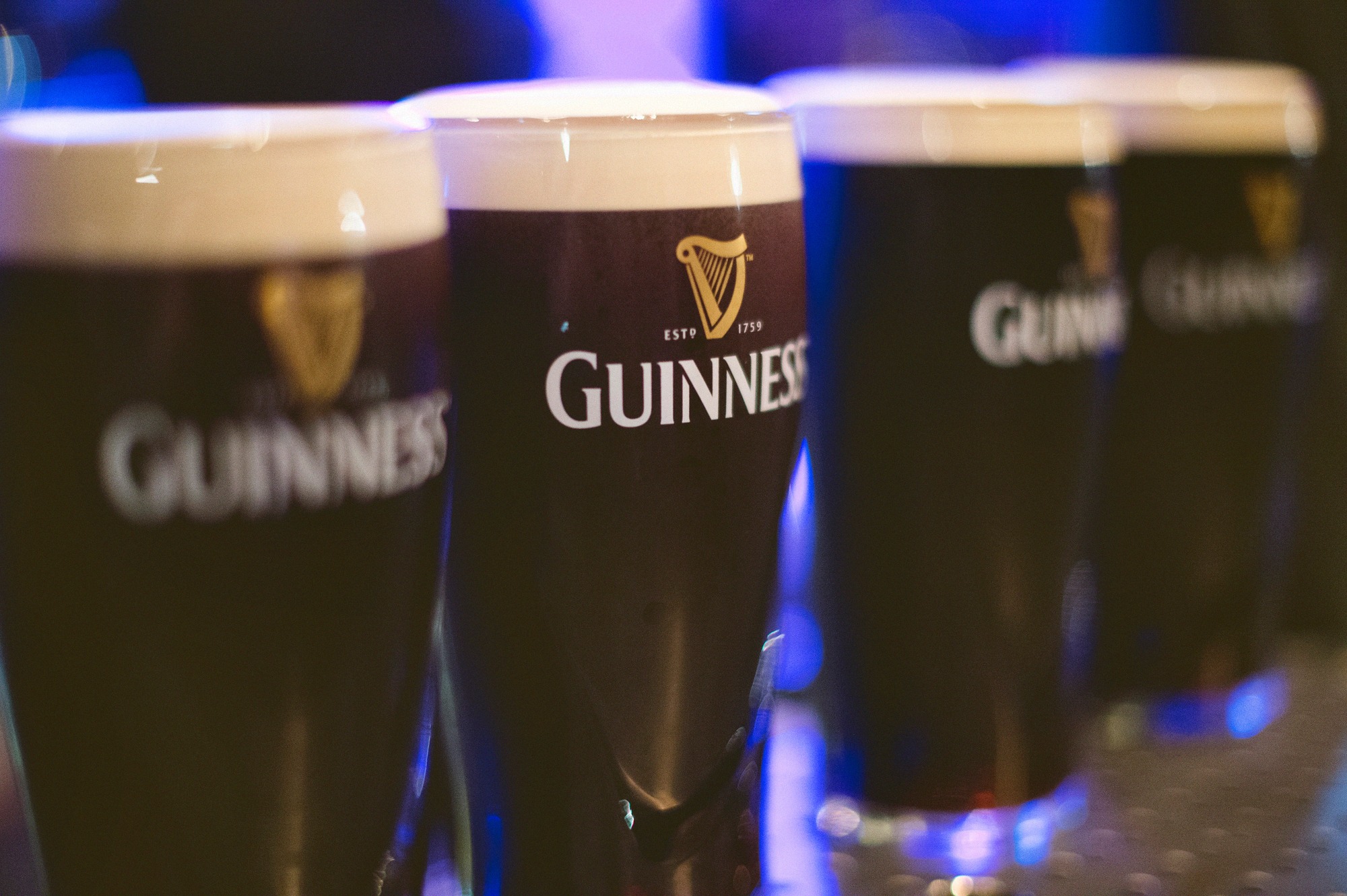
The drinking side of things has its own dedicated venues in Dublin, and its own prices. The Guinness Storehouse at St. James's Gate is Ireland's most visited attraction; the standard "Experience Only" ticket starts online at around €24 (dynamic pricing, more expensive on the day) and includes a pint in the Gravity Bar. Upgrades such as the Guinness Academy start from around €34. The Irish Whiskey Museum on Grafton Street runs tours across multiple brands from €25 (Classic), €30 (Premium) and €37 (Blending Experience). There's also Jameson Distillery Bow St., Teeling, Roe & Co and Pearse Lyons, all ticketed. For the full comparison of prices, opening hours and tour formats, see the guide to Guinness & whiskey.
Irish coffee, hot coffee, Irish whiskey, brown sugar and a layer of lightly whipped cream on top, wasn't invented in Dublin at all, but in the winter of 1943 by chef Joe Sheridan at Foynes Airport in County Limerick, then a transatlantic flying-boat hub, for freezing passengers on a flight that had turned back. When Foynes closed in October 1945, Sheridan moved with the catering crew to the new Shannon Airport; in 1951, US travel writer Stan Delaplane brought the drink to the US. If you want to learn the history and the technique in one place, the Irish Whiskey Museum runs an Irish Coffee Masterclass for €22 (45 minutes, one Irish coffee included).
Some classics are worth eating as much for their history as their flavour. Colcannon, mashed potato with cabbage or kale, the name coming from the Irish "cál ceannann", meaning white-headed cabbage, was first recorded in writing on 31 October 1735, a Halloween, in the diary of Welsh politician William Bulkeley during a visit to Dublin. Traditionally the dish is tied to Halloween and Samhain, along with marriage fortune-telling: a coin, ring or stick baked into the dish was said to foretell your future. By the 18th century, colcannon was eaten right across Ireland, not just in Dublin.
Soda bread is Ireland's signature bread, made with bicarbonate of soda instead of yeast, slightly tangy, dense and crumbly. It accompanies practically every dish mentioned here, and belongs alongside chowder, stew and oysters.
If you want to try Irish food without the meat, Cornucopia at 19/20 Wicklow Street (near Grafton Street) is the place. The family-run restaurant has been going since 1986 and serves plant-based versions of the classics, including vegan coddle and vegan Irish stew with Irish root vegetables. It's open Mon-Wed 8:00-19:30, Thu-Sat 8:00-20:30 and Sun 9:00-19:30 (as of June 2026).
For picking up your own supplies and a glimpse of everyday Dublin life, the markets are worth a visit:
At the same time, a younger generation of chefs is reinventing Irish cooking. Chapter One, under chef Mickael Viljanen (since 2021, two Michelin stars), pairs Nordic sensibility with Irish produce; Variety Jones in The Liberties, run by brothers Keelan and Aaron Higgs, awarded a Michelin star in 2026, builds an inventive sharing menu that rethinks traditional ingredients. So if you think Irish food is only ever hearty and rustic, this is where you'll be proven wrong.