
Safety and Emergency Numbers in Dublin
Emergency numbers, Tourist SOS, EHIC, pharmacies and honest facts on Dublin's safety, with current Garda and CSO figures for 2026.
Contents
How safe is Dublin, really?
Dublin isn't a dangerous city, but it isn't a sleepy, traffic-calmed idyll either. On the Numbeo Safety Index 2026, the city scores 45.8, placing it in the middle of the pack among major European capitals, rated a little safer than London (44.4), but well behind Berlin (55.5) and Amsterdam (74.3). Indices like this are built from subjective perceptions rather than hard measurements, but they capture the general order of magnitude reasonably well.
The more solid numbers come from the Irish police and the national statistics office, and for the full year 2025 they show a clear downward trend in the classic travel-related offences. According to the Garda annual statistics, the category "Theft from Person", direct theft from a person, including pickpocketing, fell 22 percent compared with 2024. Thefts from vehicles dropped 16 percent, robbery from the person fell 20 percent, and burglaries also fell 16 percent. CSO figures for the fourth quarter of 2025 confirm the picture: burglary offences down 13 percent, robbery down 11 percent, with the sharpest drop in robbery - 15 percent, recorded in the Dublin Metropolitan Region itself.
One category stands out as an exception: fraud offences rose sharply in 2025, up 137 percent according to Garda figures, driven by online fraud. For travellers, that means staying more alert at cash machines, when booking online and when paying by card than when it comes to your physical wallet.
Where it gets rowdier after dark
The figures above are national and regional percentages, neither Garda nor the CSO publish clean absolute case numbers broken down by offence type for Dublin city alone. Even so, it's possible to say roughly where travellers should stay more alert after dark. In 2026, the areas considered trickier after nightfall include the northern city centre around O'Connell Street and Parnell Street, the area around Connolly Station, Store Street, Talbot Street and Amiens Street, and Temple Bar after midnight. These areas have seen occasional night-time incidents involving tourists, mostly after 22:00.
That's no reason to avoid these neighbourhoods, during the day they're entirely unproblematic, and Temple Bar is the tourist heart of the city. It's worth avoiding walking through them alone or visibly drunk late at night, though, and taking a taxi for the last stretch instead. If you're moving between neighbourhoods in the evening, you'll find the connections in the guide to public transport.
Emergency numbers and the police
For any genuine emergency, police, ambulance, fire brigade or coastguard, dial the national 999 or the EU-wide 112 anywhere in Ireland. Both numbers reach the same control centre, are free of charge, and work even without credit on your phone. The operator will first ask which service you need, then connect you.
Deaf, hard-of-hearing and speech-impaired callers can use an SMS emergency service to 112, which works from any Irish-registered mobile phone without requiring advance registration. The Emergency Call Answering Service receives the SMS and passes it on to the Gardaí, ambulance service, fire brigade or coastguard. If you'd like to add extra information in advance, you can register it at 112.ie, but this isn't compulsory.
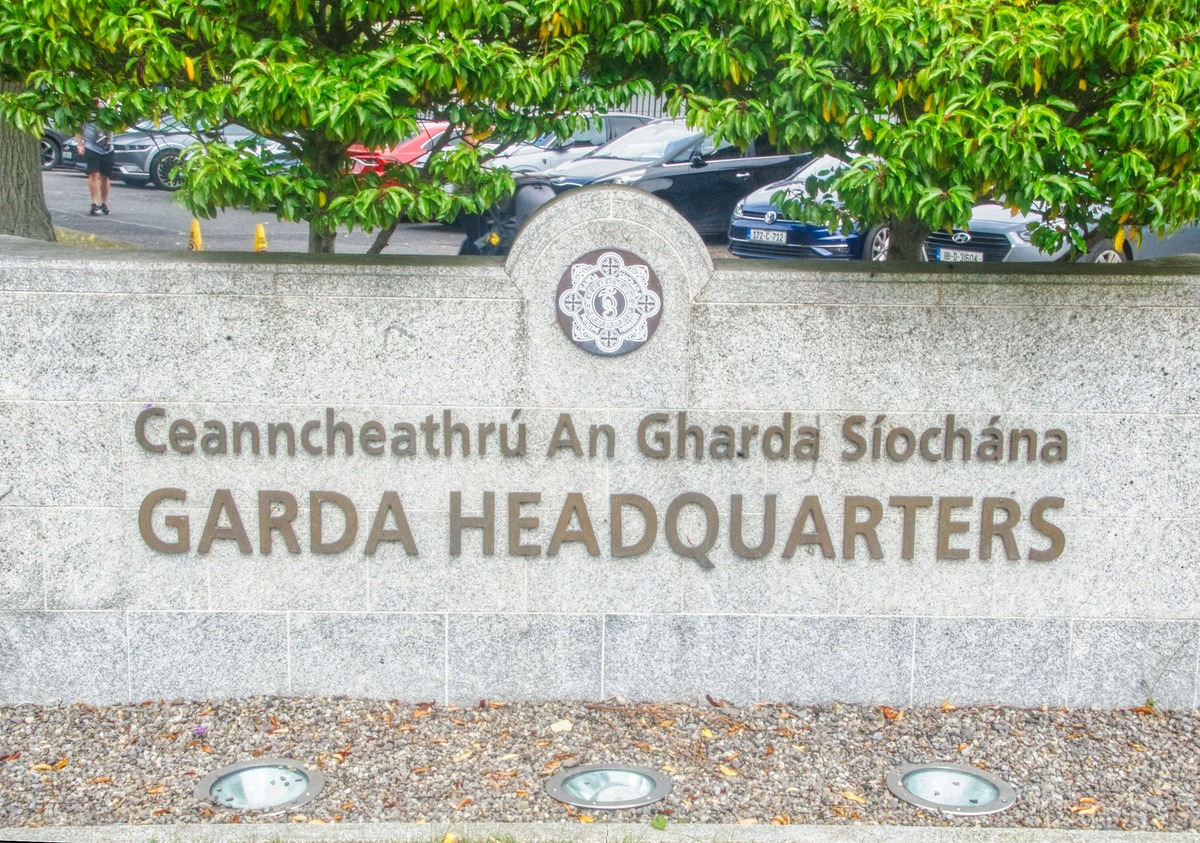
Ireland's national police force is called An Garda Síochána (Irish for "guardians of the peace"), commonly known as the Gardaí or the Guards. Officers on regular patrol duty are unarmed. For non-urgent matters, such as reporting a theft for insurance purposes, head to the nearest Garda station. The Gardaí explicitly advise against confronting an offender yourself. Ireland has no general requirement to carry ID, so it's worth keeping important documents in your hotel safe and carrying only a copy with you.
Tourist SOS, the dedicated point of contact for visitors
If you're an international visitor and become the victim of a crime or a distressing incident, Ireland has a dedicated, free support service just for you: Tourist SOS (known as the Irish Tourist Assistance Service until 2024). This nationwide service helps with emergency documents from embassies, rebooking flights, arranging accommodation and emergency financial assistance, seven days a week, by phone, WhatsApp, website and in person.
- Phone: +353 (0)1 666 9354 or +353 (0)1 661 0562
- WhatsApp: +353 (0)87 476 9402
- Email: [email protected]
- Opening hours 2026: Monday to Saturday 10:00-18:00, Sunday and public holidays 12:00-18:00
Tourist SOS runs two walk-in offices in Dublin, both located inside a Garda station: Pearse Street Garda Station (Pearse Street, Dublin 2, D02 W289) and O'Connell Street Garda Station (O'Connell Street, Dublin, D01 EF98). If you've been robbed, you can file your report and get help there at the same time.
Medical care and the EHIC
With a valid European Health Insurance Card (EHIC), EU and EEA visitors get access to the public healthcare system, but only there. Covered services include free emergency hospital treatment, treatment by GPs under contract with the PCRS, and necessary emergency dental treatment at an HSE dental clinic. Not covered are private treatment and repatriation home.
Even with an EHIC, you may still face charges: €1.50 per prescription item, capped at a maximum of €15 per month per person. The HSE is explicit that the EHIC is no substitute for travel insurance, taking out additional travel and health cover, particularly for repatriation and private care, is strongly recommended.
When it comes to ambulance response, it's worth keeping expectations realistic. The often-quoted fast response times of the National Ambulance Service are a target, not a guarantee: for life-threatening cardiac or respiratory arrest, ambulances are meant to arrive within 19 minutes in at least 80 percent of cases, and within 19 minutes in at least 50 percent of cases for other life-threatening emergencies. In practice, these targets are regularly missed, and rural or outlying areas fare worse than the urban centre. Coverage in Dublin city centre is good, but no one should rely on a fixed number of minutes.
Hospitals and pharmacies
Dublin has a dense network of emergency departments. These hospitals accept emergencies around the clock:
- Mater Misericordiae University Hospital - +353 (0)1 803 2488
- St. James's Hospital - +353 (0)1 410 3000
- St. Vincent's University Hospital - +353 (0)1 221 4000
- Beaumont Hospital - +353 (0)1 809 3000
- Tallaght University Hospital - +353 (0)1 414 2000
- Connolly Hospital Blanchardstown - +353 (0)1 646 5000
For eye and ENT emergencies, the Royal Victoria Eye and Ear Hospital (+353 (0)1 664 4600) is the point of call, and for children under 16, Children's Health Ireland at Crumlin (+353 (0)1 409 6100).
There is no 24-hour pharmacy in Dublin city centre, the latest closing times are typically around 22:00. Pharmacies are marked with a green cross, and common remedies such as painkillers or cough syrup are also sold in larger supermarkets. Pharmacies with late opening hours:
- Hickey's Pharmacy, O'Connell Street - Mon-Fri 8:00-22:00, Sat 8:30-22:00, Sun and public holidays 10:00-22:00, tel. +353 (0)1 873 0427. The chain runs five late-night branches across the greater Dublin area (Phibsborough, Harold's Cross, O'Connell Street, Ongar and Johnstown/Meath).
- Corrigan's Pharmacy, 80 Malahide Road, Dublin 3 - Mon-Sat 8:00-22:00, Sun 10:30-19:00, tel. +353 (0)1 833 8803.
Practical safety tips
Despite the falling figures, the most common risk for travellers remains opportunistic theft, in crowds, at busy attractions and from unlocked vehicles. A few habits go a long way:
- Keep valuables close to your body, bags and backpacks worn to the front in crowds, never slung open over one shoulder.
- Never leave bags unattended, not even briefly on the back of a chair in a pub or café.
- Never leave valuables visible in a car, and always lock the vehicle.
- Stay alert for fraud: since online and card fraud rose sharply in 2025, be cautious with unfamiliar booking sites, supposed "help" at cash machines, and unsolicited messages.
- After dark, avoid poorly lit areas and the hotspots mentioned above, take a taxi instead.
- If you're robbed or attacked, call 999 or 112 immediately, then file a report at a Garda station and contact Tourist SOS.
If you'd like to gather everything important before you travel, you'll find the preparation checklist in the guide to trip planning and document requirements under entry requirements.