
Where to Stay in Dublin?
Which neighbourhood suits you? Area profiles, realistic prices by category and concrete hotels for every budget, plus the weeks to avoid.
Contents
Dublin's centre is small, and a lot can be done on foot. Where you sleep mainly decides three things, how far you are from the pubs at night, how loud your night will be, and how much you'll pay. This guide breaks down the key neighbourhoods, gives realistic prices, and flags the dates you're better off not even searching.
What a hotel night really costs in 2026
Dublin is one of Europe's pricier city-break destinations, and rates swing widely. There are no reliable euro figures broken down by neighbourhood; the available numbers are booking-portal averages, mostly quoted in US dollars. As a rough guide, per night:
- Budget: around $93, simple hotels, hostel private rooms, places on the edge of town.
- Mid-range: about $137 on average, rising to around $255 in peak season.
- Luxury: roughly $213, with four-star hotels averaging around $251 and five-star hotels climbing to about $495 at weekends.
These figures are guidelines, not guarantees: on a quiet Wednesday in February you'll pay considerably less, on a rugby Saturday in March considerably more. If you're flexible, timing and location are where you'll save the most. Cheaper neighbourhoods such as Drumcondra, Phibsborough or Inchicore show hotel and apartment rates from around $60 to $90 a night, in exchange for a short bus or tram ride into the centre.
When to book, and which weeks to avoid
The cheapest months are January, February and November: rates run 25 to 40 percent below peak season depending on the source, and February is generally considered the cheapest month overall. It gets expensive and busy from June to August, with September the single most expensive month.
For a good balance of weather, daylight and price, the shoulder season is ideal, roughly April to May, and mid-September to mid-October. It's mild (around 10 to 15°C), days are long, and crowds are manageable. January and February are cheap, but the days are short and some tours or venues close for weeks at a time. For more on this, see our overview of weather in Dublin.
Three dates push prices up sharply in 2026, if you want to save money, plan around them:
- St Patrick's Festival (14-17 March 2026): the festival runs from Saturday to Tuesday, with the parade starting at midday on 17 March from Granby Row along O'Connell Street. Over that weekend hotels are close to fully booked (around 1 percent availability was reported), with rates ranging from about €199 on the outskirts to over €1,400 for central hotels.
- Six Nations home games at the Aviva Stadium: Ireland play Italy (Sat, 14 February), Wales (Fri, 6 March) and Scotland (Sat, 14 March) in 2026. Four-star hotels surveyed in Ballsbridge (Dublin 4) raise their rates by around 30 percent on average for rugby match days, in the example given, €373 instead of €288 for the cheapest double room.
- Concert and festival weekends generally, when major events squeeze demand even further.
If your trip falls on one of these dates, book as early as possible, ideally with a cancellable rate. For everything else happening in 2026, see our guide to events in Dublin.
The best neighbourhoods at a glance
| Neighbourhood | Ideal for | Connections | Price level |
|---|---|---|---|
| Temple Bar & southern city centre | Pub nights, central location, young crowd | very central, mostly walkable | high, loud |
| St Stephen's Green & Georgian Quarter | Sightseeing, shopping, culture | very central, Luas & bus | very high |
| The Liberties | History, whiskey, local pubs | buses on site, Luas nearby | medium |
| Docklands (IFSC & Grand Canal Dock) | Modern hotels, quiet waterside setting | Luas & DART | medium-high |
| Ballsbridge | Quiet, parks, families, events | DART, bus to centre | medium |
If you want to do a lot on foot, the most convenient base is between Temple Bar and St Stephen's Green. From here, Trinity College, Dublin Castle and the main museums are just minutes away. For something quieter and a bit cheaper, look to The Liberties or the Docklands.
Neighbourhood profiles
Temple Bar & southern city centre
Dublin's best-known nightlife district: cobblestones, densely packed pubs, and the shortest walk to Trinity College, Dublin Castle and the Ha'penny Bridge. You're right in the thick of it, for better and worse.
- Ideal for: night owls who want loud Dublin right on their doorstep.
- Pros: as central as it gets, huge choice of hotels and hostels, nightlife around the clock.
- Cons: the most expensive part of the city, very loud at night, don't expect a quiet sleep.
An honest note on the pubs: Temple Bar itself is largely a stage set with tourist prices. The Palace is generally regarded as the only genuinely authentic pub in the district. Travellers after the real Dublin tend to head instead for Kehoe's (open since 1803, with Victorian snugs), The Long Hall (almost unchanged since 1881), or The Cobblestone in Smithfield, which has live traditional music every day. Locals themselves gravitate towards Camden Street or Rathmines.
St Stephen's Green & Georgian Quarter
Elegant Georgian Dublin, with townhouses, embassies and several five-star hotels. The National Gallery, National Museum, Trinity College and Grafton Street all sit nearby, along with plenty of green space.
- Ideal for: culture and shopping fans who want a central, upscale base.
- Pros: museums and shopping streets on the doorstep, very safe, handsome architecture.
- Cons: the city's highest hotel rates, quiet in the evenings.
The Liberties
One of Dublin's oldest neighbourhoods, once a working-class quarter, now enjoying a creative revival. The Guinness Storehouse, the Teeling distillery and St Patrick's Cathedral are all around the corner, alongside old-school pubs well off the tourist trail.
- Ideal for: history and whiskey fans after a more authentic side of Dublin.
- Pros: plenty of sights within walking distance, less touristy, cheaper than the centre.
- Cons: no Luas or DART stop right in the core, some parts still in transition.
On connections: the nearest Luas Red Line stops (James's, St James's, Heuston) sit on the edge of the district. The Liberties is mainly served by Dublin Bus routes, including along Thomas Street. Christ Church Cathedral is an easy walk from the centre. For whiskey background, see our piece on Guinness & whiskey.
Docklands (IFSC & Grand Canal Dock)
A modern harbourside district with stylish hotels, tech offices and waterfront promenades. Highlights include the Bord Gáis Energy Theatre and the EPIC Emigration Museum. Noticeably quieter at night than Temple Bar.
- Ideal for: anyone who wants a modern, quiet base by the water, including families and business travellers.
- Pros: plenty of newer hotels, good Luas and DART connections, relaxed atmosphere.
- Cons: quiet at weekends, little historic character.
Ballsbridge
A leafy, upmarket district in the southeast on the River Dodder, known for embassies and the Aviva Stadium. Much quieter than the centre, but the DART gets you into the city and along the coast quickly.
- Ideal for: families and anyone who values a safe, green base to unwind in.
- Pros: quiet, safe, plenty of greenery, good DART connections.
- Cons: a fair walk to the centre, little nightlife on the doorstep, few genuine budget beds.
Budget is a real issue in Ballsbridge specifically: options are thin on the ground. Travellers after a cheap bed here usually end up at the Herbert Lodge Hostel near UCD and the RDS, or in B&Bs and guesthouses like the Pembroke Townhouse; Ariel House sits more towards the upscale end. The trade-off is the fast DART link into the centre.
Concrete hotels by price bracket
The following properties are meant as reference points and were operating in 2026. Prices aren't fixed, they run considerably higher in peak season and around events.
- Generator Dublin (budget/hostel, Smithfield Square): a design hostel with 110 rooms right next to the Jameson Distillery, renovated in 2021, with its own café and bar. A solid, centrally located budget option with affordable private rooms.
- Drury Court Hotel (mid-range, Dublin 2): an independent three-star boutique hotel on Stephen Street, about a two-minute walk from Grafton Street. Central, small-scale feel, good for culture and shopping.
- Clayton Hotel Cardiff Lane (mid-range/upscale, Grand Canal Dock): a dependable four-star property from the Irish Clayton chain, roughly a 15-minute walk to the centre. Includes the Club Vitae leisure centre with a 22-metre indoor pool, gym, sauna, jacuzzi and steam room, a plus for families and rainy days.
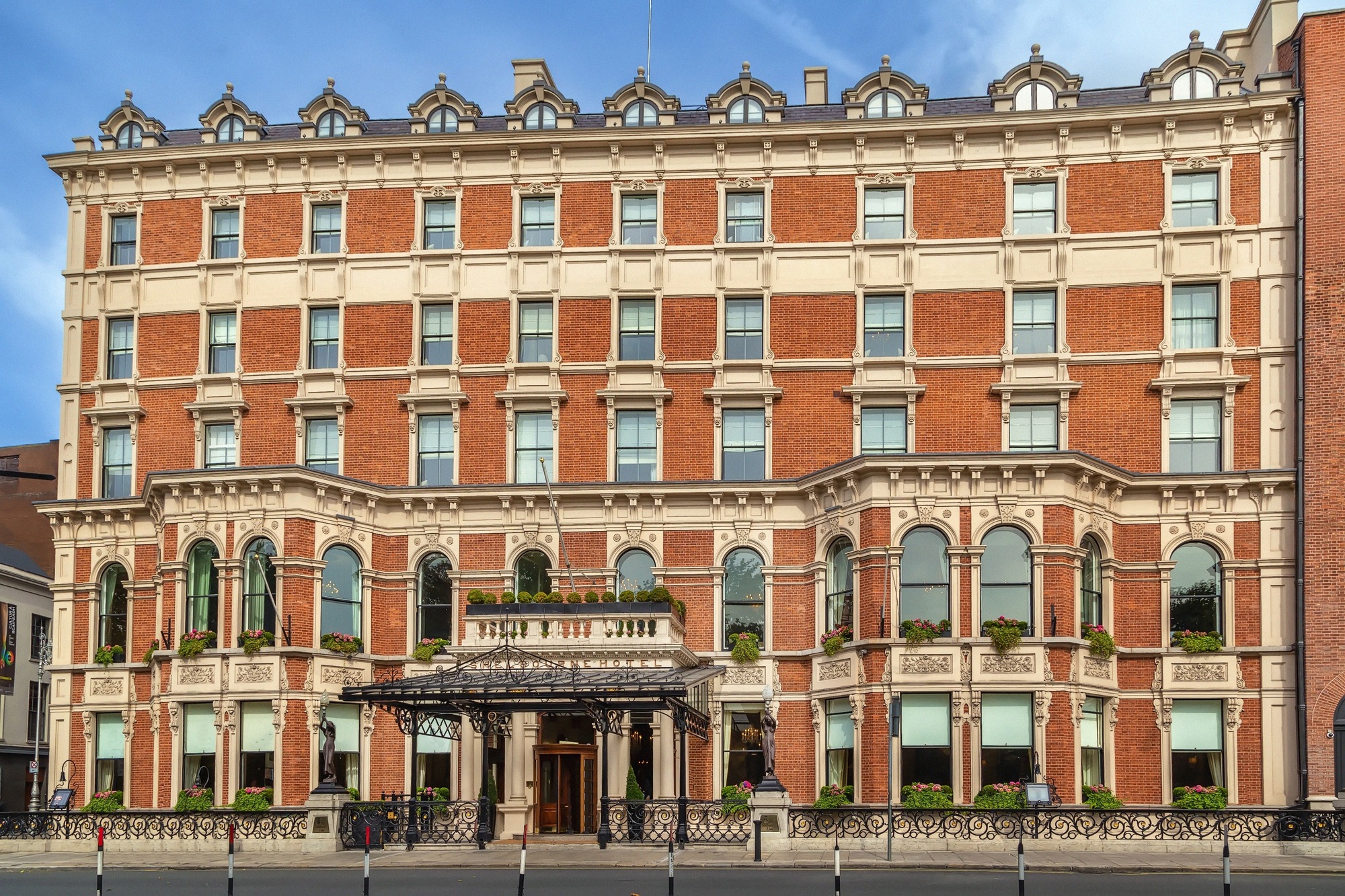
For luxury, the supply is concentrated around St Stephen's Green, the Georgian Quarter and Grafton Street; the well-known grand hotels and design properties sit in these locations, priced accordingly at the top of the range above.
Hostel, hotel or apartment? The matrix
Which type of accommodation makes sense depends on the neighbourhood. The short version:
| Neighbourhood | Hostel | Hotel | Apartment / B&B | Realistic budget |
|---|---|---|---|---|
| Temple Bar & southern city centre | plenty, noisy | plenty, expensive | few | high |
| St Stephen's Green & Georgian Quarter | hardly any | many, upmarket to luxury | few | very high |
| The Liberties | a handful | mid-range | growing | mid |
| Smithfield & Stoneybatter | yes, good addresses | a few | apartments | mid |
| Docklands | hardly any | many new builds | apartments | mid to high |
| Ballsbridge | thin | four-star and event hotels | B&Bs and guesthouses | mid |
| Drumcondra, Phibsborough, Inchicore | a few | simple hotels | many B&Bs | low |
Staying cheaply - hostels and alternatives
Dublin has a dense hostel scene, and it isn't just for backpackers. Most houses let private rooms alongside dorms, often en suite; they cost less than a hotel room in the same location and are usually more central than a cheap hotel on the edge of town. Hostel density is highest in the north inner city around Gardiner Street and the bus station, with more in Temple Bar, near Christ Church and in Smithfield. A central address with renovated private rooms is the Generator Dublin on Smithfield Square mentioned above; in Ballsbridge, the Herbert Lodge Hostel.
What to watch when booking:
- Dorm or private room: the price gap is wide, and so is the comfort gap. Travelling as a pair, you're often better off in a hostel private room than in a bed in an eight-bed dorm.
- Location before price: a cheap bed far out eats the saving in travel time and fares. Smithfield, the Liberties and the northern inner city offer the best compromises.
- Book early: around St Patrick's Day, the Six Nations home games and in the summer holidays the hostels sell out too.
- Check the extras: towels, lockers and breakfast aren't included everywhere; luggage storage on your departure day usually is.
An underrated summer alternative is university halls of residence. Trinity College opens its city-centre residences to travellers outside term time, with single and double rooms (some en suite) and whole apartments for families and groups, booked through visittrinity.ie. The rooms sit on the historic campus, are staffed around the clock, and typically price between a hostel private room and a mid-range hotel. Correct as of September 2026.
If you want to go cheaper still, look at Drumcondra, Phibsborough or Inchicore: simple hotels, B&Bs and apartments at noticeably lower rates, in exchange for 10 to 20 minutes on the bus or Luas into town. With a Leap Card and its €6 daily cap, that stays cheap even with several journeys a day.
Getting from the airport to your accommodation
The airport is about 17.5 kilometres from the centre, and your choice of transfer makes a noticeable difference to both time and budget:
- Aircoach (route 700): runs roughly every 15 minutes (around 03:15 to 23:55) into the centre, with a journey time of 25 to 40 minutes. Single tickets from about €10, return tickets around €12, sometimes cheaper booked online.
- Dublin Express: single tickets around €9, return tickets about €11.
- Taxi: journey time roughly 25 to 45 minutes depending on traffic, a metered fare typically about €22 to €40, more at night and on public holidays. Expect possible waiting time at the taxi rank during peak periods.
Worth knowing: the Leap Card isn't valid on Aircoach or Dublin Express. It's still worth having for the rest of your stay on bus, Luas and DART, see how it works in our guide to the Leap Card. Full details on all the options are in our overviews of Dublin Airport and public transport in Dublin.
One last practical tip: book the big attractions in advance with a fixed entry time. The Guinness Storehouse starts at around €24 per person, including a pint in the Gravity Bar; the Book of Kells Experience at Trinity College costs adults €25 (the Long Room stays accessible through the conservation programme until 2027). Dublin Castle is off the list, it is closed until the end of December 2026. Booking online ahead of time secures your preferred slot and saves you queuing.