
Language
Irish, Hiberno-English and the Dublin accent, why you rarely hear Gaelic on the street, what craic and eejit mean, and where to learn Irish.
Contents
People in Dublin speak English, but an English with its own melody, its own vocabulary and a history that reaches back to Gaelic. Visitors to the city will hear almost no Irish spoken on the street, yet will see it written everywhere. This guide explains where Irish stands today, where the city's distinctive accent comes from, which words are worth knowing, and where you can even learn the old language yourself.
Irish in Dublin, everywhere in writing, rare in speech
Irish (Gaeilge in Irish) is the constitutional first official language of the Republic. In Dublin's everyday life, though, it's very much a minority presence. The 2022 census paints a sobering picture: around 162,400 people in Dublin City could speak Irish, which is 33% of the population aged 15 and over, the lowest share of any administrative area in Ireland. Adding up all four Dublin local authority areas brings the total to about 467,400 speakers.
Behind "being able to speak it" lies a wide spectrum of ability. Of the Irish speakers in Dublin City, only 10% rated their ability as very good, 31% as good and 57% as not good. What matters more is how many actually use Irish day to day: in Dublin City only 1,589 people spoke it daily (inside and outside the education system), down from 1,875 in 2016. In Dublin, Irish functions mainly as a school subject and a cultural symbol rather than a living everyday language.
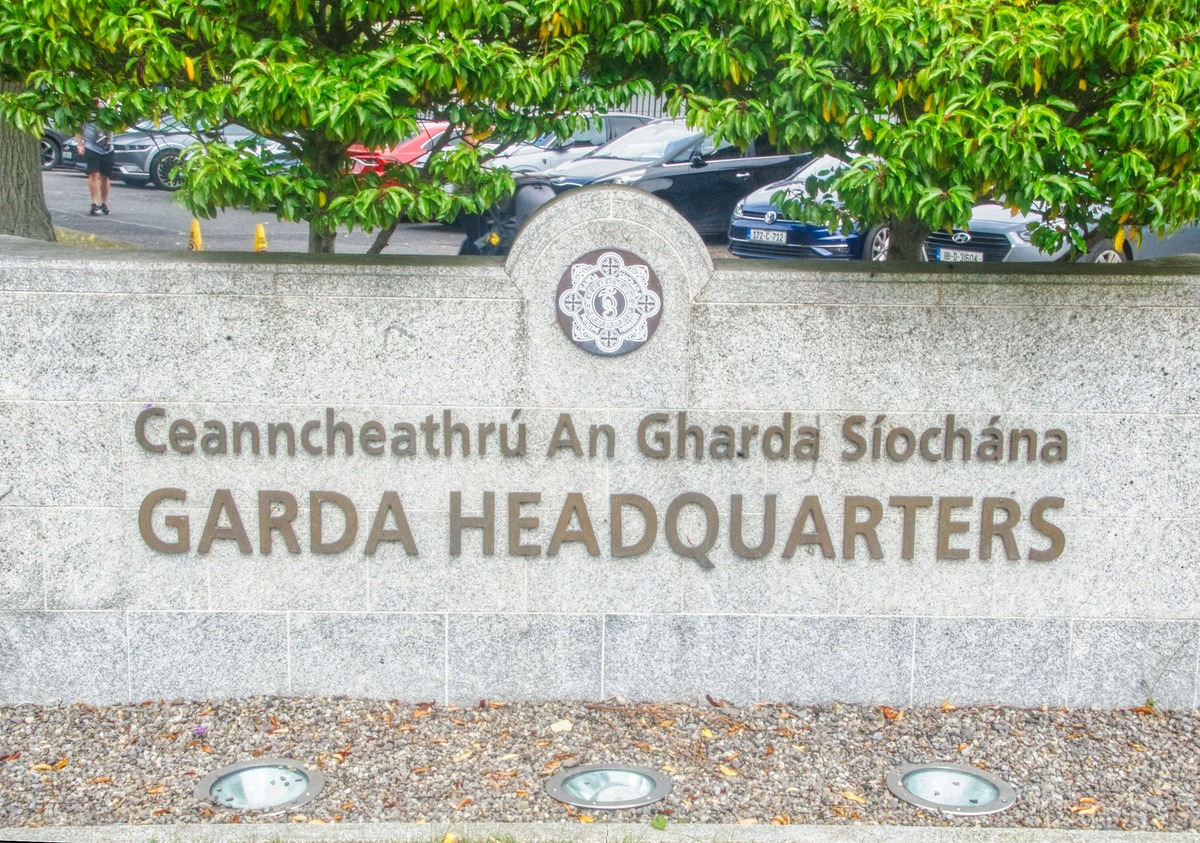
It's still visible almost everywhere, though. Exhibitions, government offices and especially signage all carry the old language, even where hardly anyone speaks it.
Why hardly anyone still speaks Gaelic
The fact that Irish is now a minority language traces back to a historical turning point. Well into the 18th century, a large share of the island's population spoke Irish; before the Great Famine, it was close to half. The decline had already begun earlier, but the Famine of 1845-1852 massively accelerated the shift to English. It's considered a defining turning point in Irish history, around a million dead and at least a million emigrants.
The geography of the disaster was especially harsh on the language: the Irish-speaking regions in the west and south were hit hardest of all. Those who survived often emigrated, and English became the language of economic survival and of emigration itself. By around 1900, only about 15% of the population still spoke Irish. For the wider historical context, see the guide to Dublin's history; for how much the city has changed since, see Dublin at a glance.
Irish on signs, what's bilingual and what isn't
Visitors encounter Irish most often by looking up or to the side, on signs. Outside the Gaeltacht, the traditionally Irish-speaking areas, road and street signs across Ireland are consistently bilingual. Irish appears on top (usually in italics), with English below it. Inside the Gaeltacht, it's the reverse, only Irish is used, which can trip up drivers of hire cars who suddenly find themselves reading nothing but Irish place names.
The legal position is more nuanced than it looks. The Official Languages Act 2003 (together with the Section 9 regulations of 2008) requires bilingual or Irish-language wording on official signage from public bodies. Road traffic signs, however, are explicitly excluded, these fall under transport regulations, most recently the Road Traffic (Traffic Signs) Regulations 2025. So bilingual signage on the roads doesn't follow from a single rule, but from its own separate traffic regulations. There's no reliable figure for what share of signs specifically in Dublin are bilingual, but the Irish-on-top, English-below practice is the norm everywhere outside the Gaeltacht.
Hiberno-English, why the accent sounds the way it does
The English you hear in Dublin is called Hiberno-English, and it sounds different from British English for good reason. A few features are easy to pick out once you start listening for them:
- Rhotic: every R is pronounced, similar to American English. The "r" at the end of a word isn't dropped.
- "th" often hardens: in words like "thin" or "this", the "th" shifts towards t or d, so "three" can sound almost like "tree".
- T and D shift: before certain vowels, T tends towards CH ("two" can sound almost like "chew"), and D towards J - "idiot" colloquially becomes "eejit".
- An inserted vowel: between r and m, an extra vowel often slips in, which is why "film" can sound like "fillum".
These quirks trace largely back to the underlying Irish language, which shaped the pronunciation of the English that replaced it. The result is an accent that many find more melodic than standard British English, and one that fits remarkably well with the city's pubs, music and storytelling culture.
Which Dublin accent, and how easy to follow
Strictly speaking, there's no single "Dublin accent". The range runs from suburban accents that can sound almost American to working-class dialects that outsiders can find very hard to follow. The good news for visitors: the Dublin accent overall is considered one of the most accessible Irish accents for outsiders, partly because it's so present on radio, television and film.
It gets trickier outside the capital. Rural dialects from places like Kerry or Donegal take considerably more getting used to. So if you're following along fine in Dublin, don't be surprised if your ear needs to readjust on a trip out west. In practice, one thing almost always helps: just ask. Irish people are generally chatty and won't mind at all if you ask them to repeat themselves.
Craic, eejit and co., pub vocabulary
A handful of expressions are essential vocabulary for getting around Dublin, many of them borrowed from Irish or particular to Hiberno-English:
- craic (pronounced like "crack"), fun, good spirits, sociable conversation. "What's the craic?" is roughly "What's up?".
- eejit, an affectionately mocking word for idiot, derived from the Dublin pronunciation of "idiot".
- feck, a softened, almost harmless swear word in everyday use.
- slagging, teasing or ribbing someone, usually meant in a friendly way.
- sound, decent, reliable; "he's sound" is a genuine compliment.
- ye, the plural "you", a form that standard English lacks.
There's also the diminutive suffix -een, taken from the Irish -ín, which gives words a small, often affectionate spin, as in poteen (from the Irish poitín), the home-distilled potato spirit, literally "little pot". Some of these borrowings have made their way into international English: "colleen", meaning a young girl, comes from the Irish cailín (girl, young woman; roughly "kah-LEEN"), adopted into English in the 19th century. For the setting where all this vocabulary comes alive, see pubs and food and the guide to Guinness and whiskey.
A few Irish words worth knowing
Even without a language course, a handful of Irish phrases are genuinely useful, since you will run into them in Dublin. The best known is Céad míle fáilte, literally "a hundred thousand welcomes" (roughly "kayd MEE-leh FAWL-cha"). The greeting welcomes travellers at, among other places, Dublin and Shannon airports, and it's something of the linguistic calling card of Irish hospitality.
In the pub, you'll often hear Sláinte as a toast, meaning "cheers" or "good health" (a common approximation is "SLAWN-cha"). Using a few of these phrases tends to go down well, if only because it shows an interest in the country. For more on the customs these words are embedded in, see the guide to Irish traditions and customs.
Learning Irish in Dublin
For anyone wanting to go deeper, Dublin has some solid options. The central address is Conradh na Gaeilge (6 Harcourt Street, also at 66 Camden Street Lower, Dublin 2): the organisation runs year-round Irish courses at every level from beginner (A1) to advanced (C1), plus an Irish-language social club and online courses. Its teachers come from all three major Gaeltacht regions, covering a range of dialects between them.
On the academic side, there's the UCD Global Centre for Irish Language & Culture at University College Dublin. Summer courses for visitors are also promoted through Visit Dublin and Discover Ireland. If you're staying in the city longer, the guide to studying in Dublin has more pointers. And if you'd rather experience the language through its literary legacy, the major names are gathered in the overview of Dublin's writers.