
St Stephen’s Green
Dublin's central park, with an ornamental lake and monuments
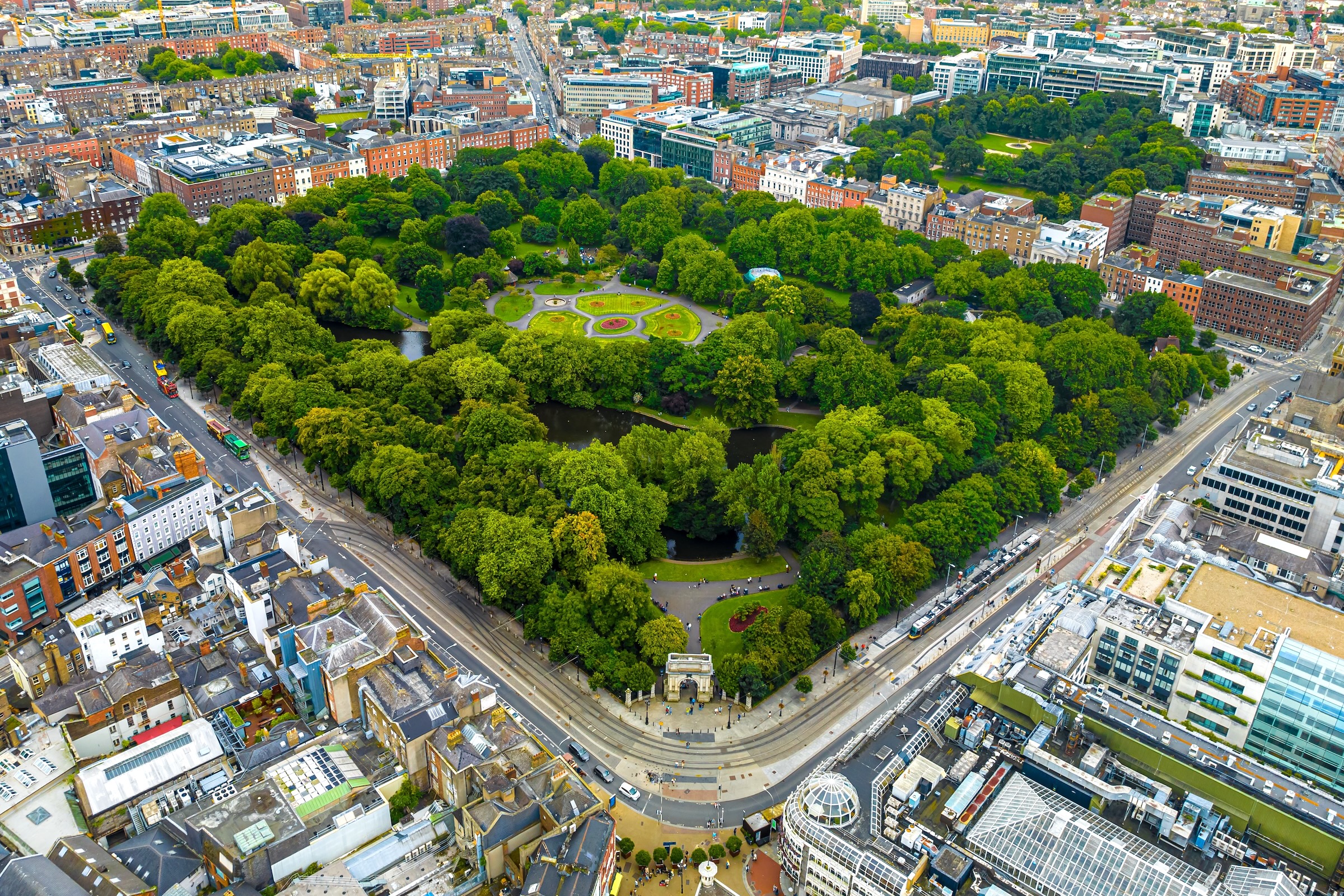
Dublin's central park at the end of Grafton Street, laid out in Victorian style, with an ornamental lake, over 750 trees, an open-air sculpture garden and traces of the 1916 Easter Rising.
Contents
Right in the city centre, at the end of the Grafton Street shopping strip, St Stephen’s Green is Dublin's central park. Across roughly 9 hectares you'll find over 750 trees, more than 3.5 kilometres of paths, an ornamental lake with a waterfall, and a good dozen monuments, laid out in Victorian style and free to enter year-round. For a break between shopping and sightseeing, the park is the obvious green spot to head for.
From common grazing land to city park
Until 1663 the site served as marshy common land outside the gates of medieval Dublin. Its name comes from a nearby leper hospital dedicated to St Stephen. Dublin Corporation had the area enclosed in 1664 and sold the surrounding land for development; through the 18th century the elegant Georgian townhouses that still frame the square today were built around it.
In 1814 commissioners representing local residents closed the park to the public. It was Sir Arthur Edward Guinness, later 1st Baron Ardilaun, who changed that: in 1877 he bought the rights and funded a redesign. Landscape gardener William Sheppard laid the park out in Victorian style, with sweeping paths, exotic planting, the ornamental lake and Pulham rockwork. On 27 July 1880 it reopened to all of Dublin's citizens, and has stayed open ever since.
The park during the 1916 Easter Rising
During the Easter Rising, rebels under Michael Mallin and Constance Markievicz occupied the park and dug trenches, while British troops held the Shelbourne Hotel opposite. One unusual episode has come down through history: both sides agreed a daily ceasefire so the park keeper could feed the ducks. At the Fusiliers’ Arch on the north-west entrance, bullet holes from that period are still visible today, traces of British machine-gun fire from the nearby hotel.
Monuments and what they tell you
The park doubles as an open-air sculpture garden. Among its best-known stops:
- Fusiliers’ Arch, at the Grafton Street entrance, erected in memory of the Royal Dublin Fusiliers who died in the Second Boer War, bearing the 1916 bullet holes mentioned above.
- The Three Fates, a bronze fountain by Josef Wackerle from 1956, near the Leeson Street entrance. It was a gift from the Federal Republic of Germany, in thanks for Ireland taking in up to 500 refugee children after the Second World War under "Operation Shamrock".
- Statues and busts of Wolfe Tone, Robert Emmet and James Joyce, plus an abstract sculpture of W. B. Yeats by Henry Moore.
- A seated statue of Lord Ardilaun, facing the Royal College of Surgeons, the man Dublin has to thank for the park's present form.
Operation Shamrock was a relief programme run by the Irish Red Cross: from July 1946, around 500 mostly German children came to Ireland to recuperate, with the first group landing at Dún Laoghaire on 27 July 1946.
What to expect
Alongside the monuments, the park has specific draws for different visitors:
- Ornamental lake with waterfall, Victorian rockwork and ducks, the calm heart of the park.
- Children's playground with separate areas for different age groups.
- Garden for the visually impaired, with scented plants and Braille signage.
- Victorian pavilions offering shelter, handy given Dublin's changeable weather.
Free lunchtime concerts run on weekdays in summer; the operator doesn't publish an official 2026 programme, so it's best to drop by and see what's on. The park was again awarded the international Green Flag Award for its upkeep in 2025.
Visiting: the practicalities
Admission is free. A quick walk-through takes 30 to 45 minutes; if you want to take in every monument with the audio guide, allow a good hour, so an hour or two altogether. It's at its best in spring and early summer, when everything is in bloom and daylight lasts well into the evening.
- Audio guide: the official guide is free via the GuidiGO app (iOS and Android), covers 10 stops around the park in about an hour, and includes an offline map. There's also the GPS-guided Ellen Reid SOUNDWALK, a collaboration between the OPW and the National Concert Hall.
- Opening hours: Mon-Sat from 7:30, Sun and public holidays from 9:30, closing at dusk. The exact closing time shifts with the season, until 21:00 in summer, but as early as 16:00-17:00 in winter. On 25 December, hours are just 9:30-12:30.
- Guided tours: on request, with at least a month's notice, for groups of up to 20 people.
Getting there and combining your visit
The Luas Green Line stops right at St Stephen’s Green station; the best-known entrance is the Fusiliers’ Arch at the north-west corner, at the end of Grafton Street. For ticket and fare tips, see the Leap Card guide.
The location makes the park an ideal stop along the way: just a few minutes' walk are Trinity College with the Book of Kells, the Museum of Literature Ireland right on the park, and the National Gallery. For more green space outside the city centre, Phoenix Park is a good choice, with an overview in the Parks and Gardens guide. To dig deeper into the historical background, see the Dublin History guide.
Frequently asked questions
How much does it cost to visit St Stephen’s Green? +
What are the opening hours of St Stephen’s Green? +
Is there an audio guide? +
How do you get to the park? +
Nearby
MoLI
The Museum of Literature Ireland, set in two Georgian townhouses, displays "Copy No. 1" of Joyce's Ulysses and celebrates Irish literature.
Little Museum
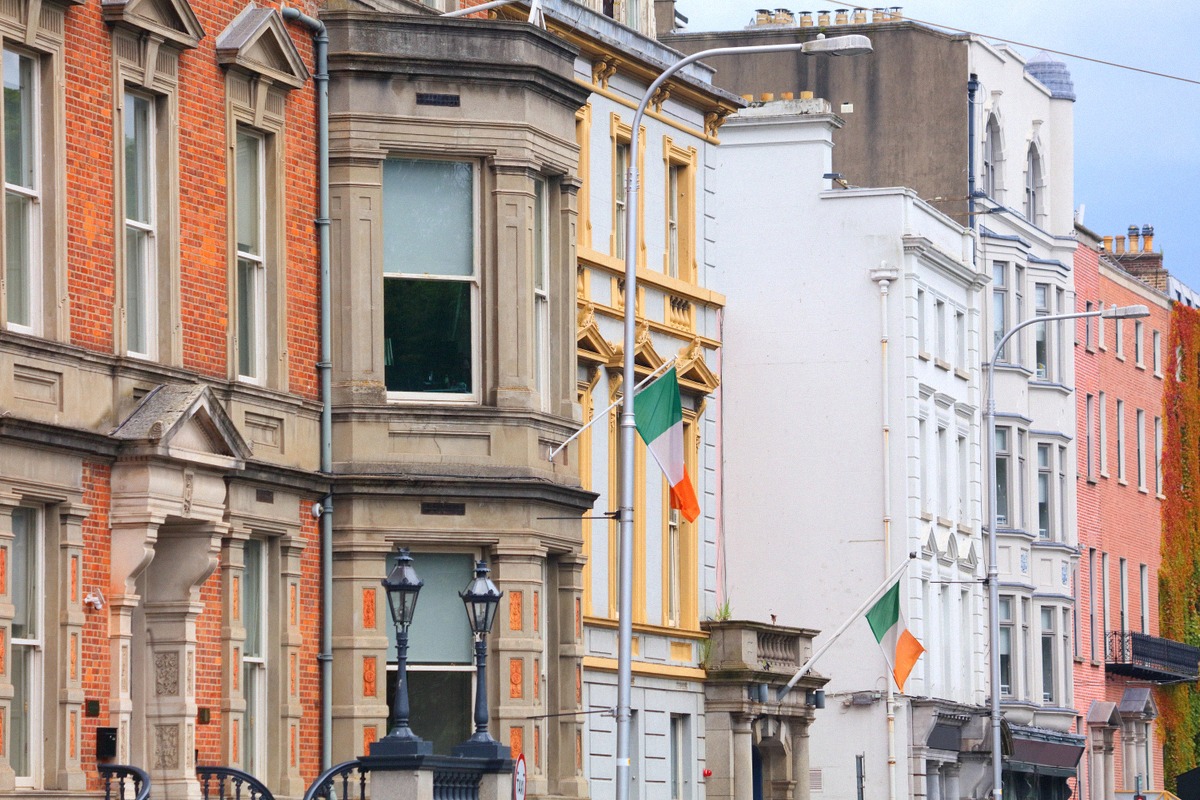
The Little Museum of Dublin on St Stephen's Green tells the story of the city's 20th century in a lively half-hour guided tour.
Mansion House
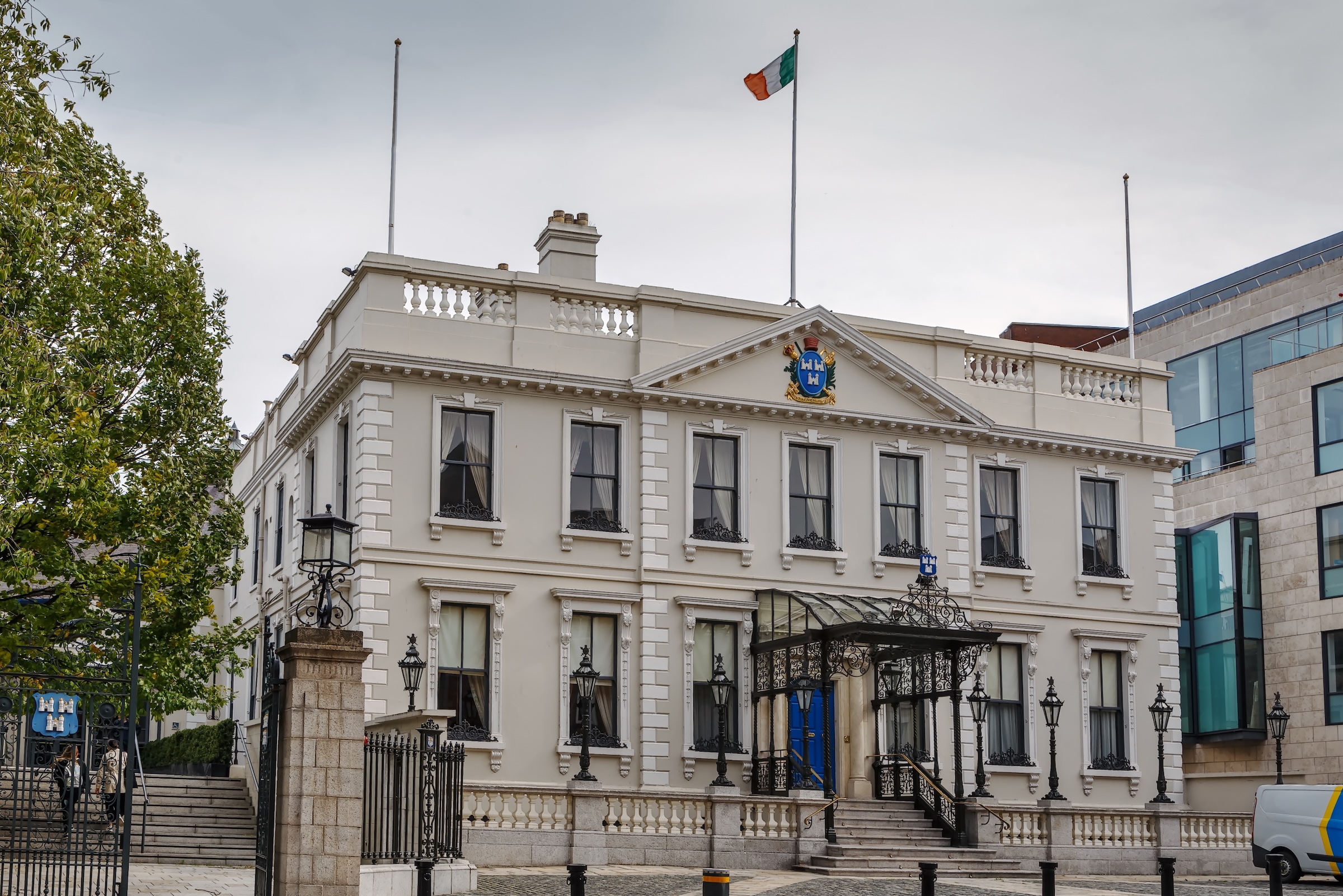
Dublin's Mansion House has been the Lord Mayor's residence since 1715 and the site of the 1919 Declaration of Independence. Visits only on special occasions.
Natural History Museum
The National Museum of Ireland - Natural History, Dublin's "Dead Zoo", has been closed for restoration since September 2024; see highlights instead at the "Dead Zoo Lab" in Collins Barracks.
Leinster House
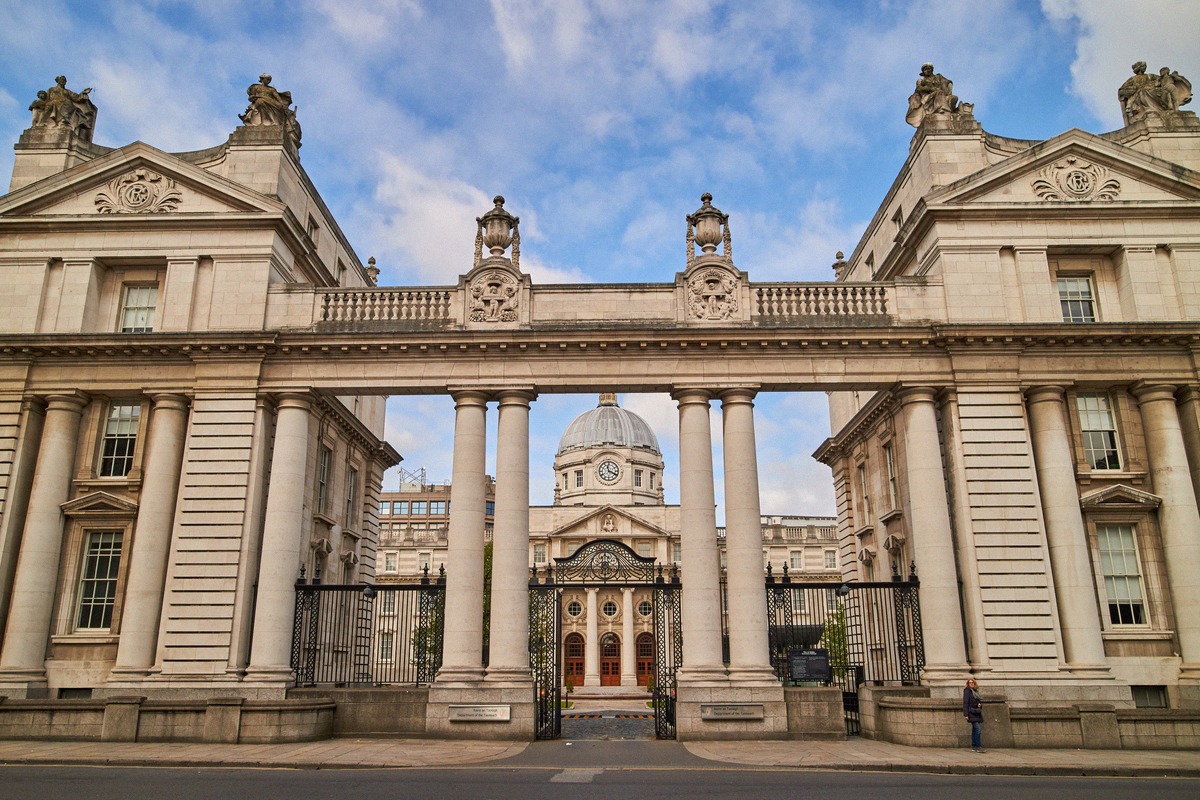
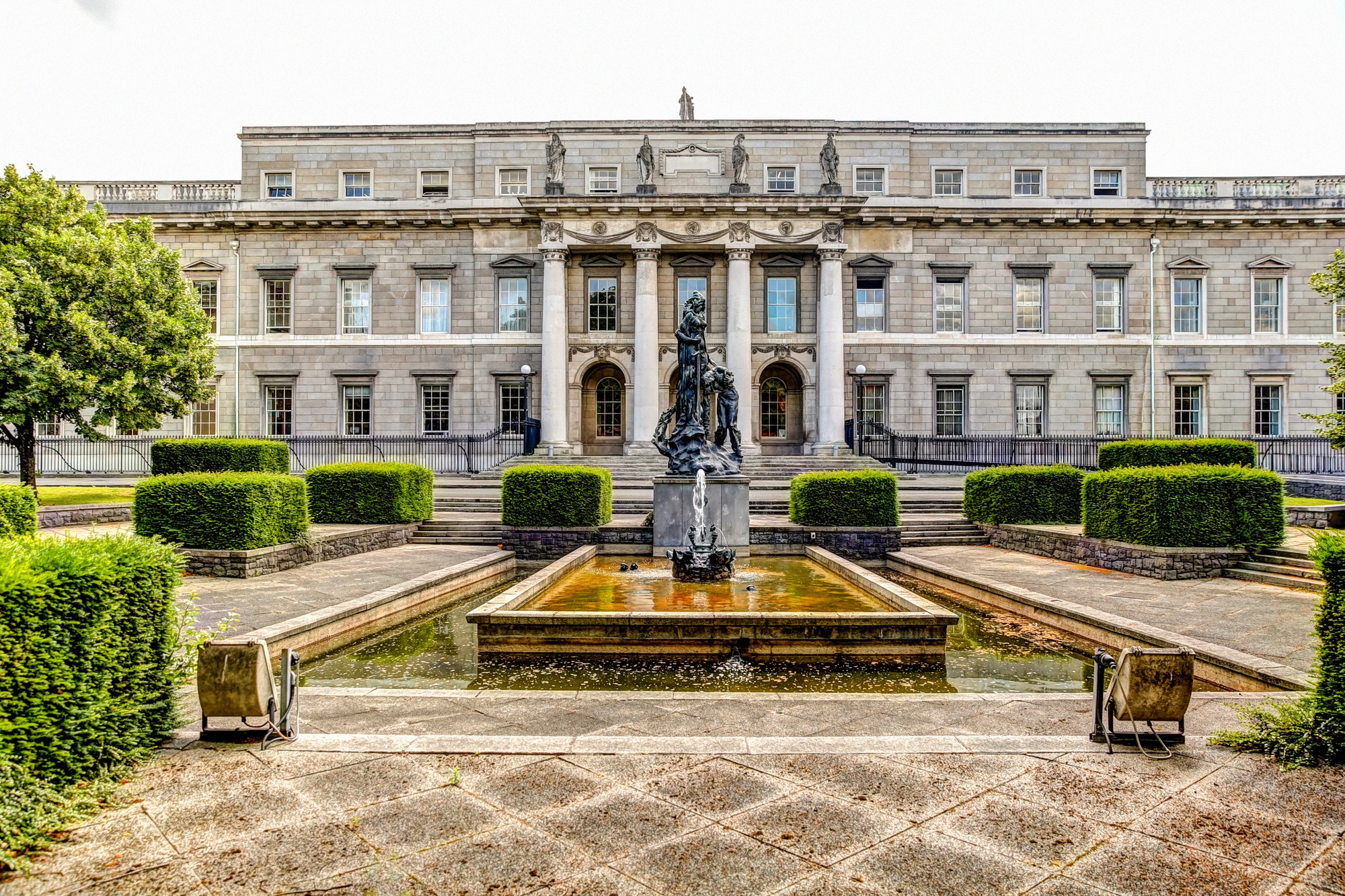
Leinster House on Kildare Street is home to the Irish Parliament, where the Dáil and Seanad sit. Tours run only via a TD or Senator, plus a free 3D tour.
Government Buildings
Ireland's Government Buildings on Upper Merrion Street open for free guided tours on Saturdays. Everything on tickets and getting there.