
Four Courts
Neoclassical courts building on Inns Quay
The Four Courts on Inns Quay is Ireland's most important courts building, designed by James Gandon. Public hearings are free to attend.
Contents
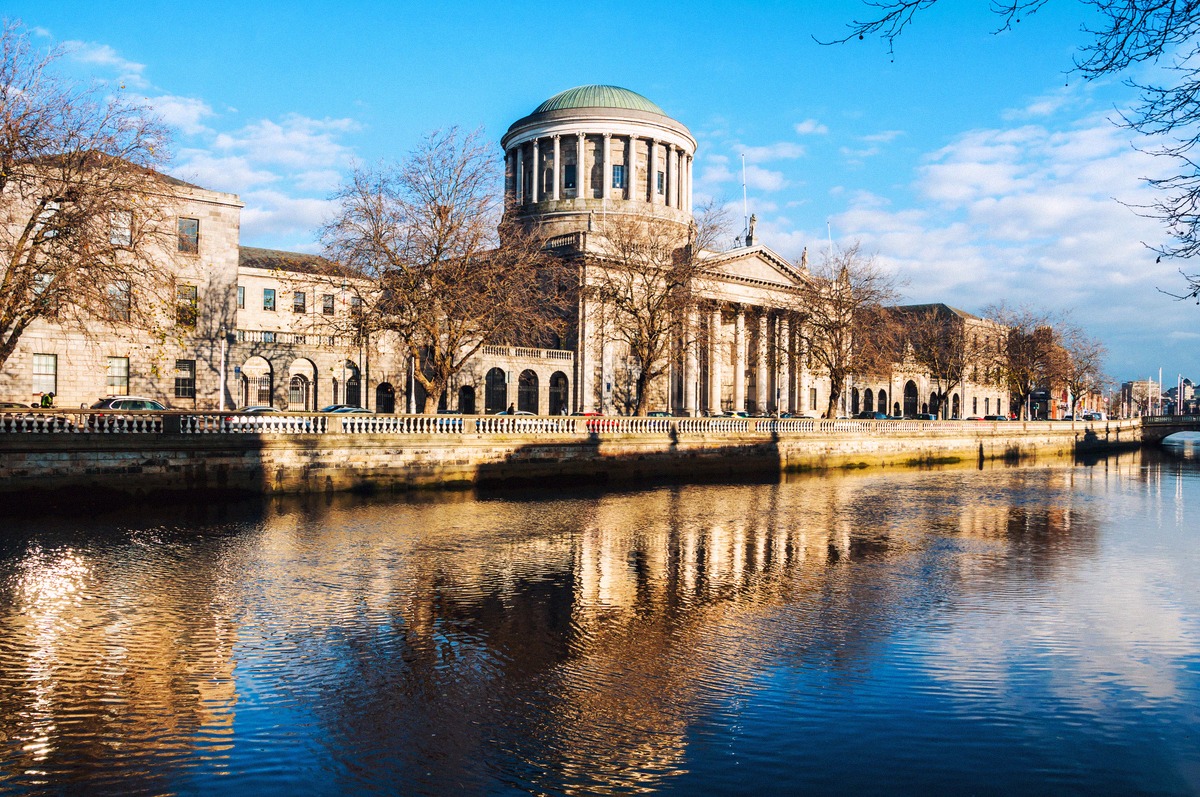
The Four Courts on Inns Quay is Ireland's most important courts building and one of the finest works by James Gandon, the architect who also designed the nearby Custom House. Seen from the Liffey quays, the neoclassical building with its imposing dome is often mistaken for a church. If you'd rather not stop at the outside view, public hearings are free to attend, so as a visitor you can step inside and see the impressive Round Hall for yourself.
Gandon's design
The Four Courts was built mainly between 1786 and 1796 to a design by James Gandon, who was working on the Custom House downstream at almost the same time. The finishing work on the arcades and side wings was completed in 1802. Unlike its sister building on the quays, the central block with its Corinthian columns doesn't reach quite as high: above the portico sits a drum topped with a somewhat flatter dome.
At its heart is the Round Hall, a circular entrance hall around 20 metres across that rises all the way up into the dome. It's considered the physical and symbolic centre of the building, and it's the space visitors attending public hearings get to see.
Civil war and the loss of the archives
The building was damaged by British troops during the 1916 Easter Rising, then hit hard by Provisional Government forces during the 1922 Civil War. That attack also destroyed the Public Record Office, housed in the west wing, around 700 years of Irish historical records were lost, including Gandon's original drawings. When reconstruction was completed in 1932, the ornate original interior was not faithfully recreated, so some of the effects Gandon designed are no longer there to see.
Which courts sit here
The "four courts" that gave the building its name are long since not the only ones housed there. As of 2026, the building holds the Supreme Court, the Court of Appeal, the High Court and the Dublin Circuit Court. Most criminal trials moved out when the Criminal Courts of Justice opened on Parkgate Street in January 2010; the Central Criminal Court has sat there ever since.
Sittings are divided into four terms: Michaelmas (first Monday in October to 21 December), Hilary (from 11 January), Easter, and Trinity (ending 31 July). In between, from late July to early October, comes the Long Vacation, when few cases are heard.
Visiting
The best view of the domed façade and columned portico is from the opposite south bank of the Liffey. For the interior, you don't need an appointment or advance booking, court hearings are, as a rule, open to the public. The main entrance on Inns Quay leads in after a security check. In the Round Hall you can watch barristers in black gowns going about their business, and you're free to sit in on public hearings.
- Admission is free and no ticket is needed; there's just a security check at the entrance.
- Visit on weekdays (Mon-Fri) during term time; during the summer recess (late July to early October) few courts are sitting.
- Check the Legal Diary (legaldiary.courts.ie) beforehand to see which cases are listed. The list is updated on weekdays at 17:00.
- Courtroom rules apply: phones on silent, no photos or recordings. No entry when a courtroom is marked "in camera".
- Large groups should contact the local court office in advance; anyone needing mobility assistance should inform the court ahead of time.
Realistically, visiting the interior is mainly of interest to those keen on architecture or the legal system; if you're short on time, the building is still impressive seen from the quay. Nearby, St Michan's Church is well worth a visit; for more on getting around, see the public transport guide, and the attractions overview helps with planning your day.
Frequently asked questions
How much does it cost to visit the Four Courts? +
Can you visit the Four Courts? +
What are the opening hours? +
Which courts sit at the Four Courts? +
Anything to know before visiting? +
Nearby
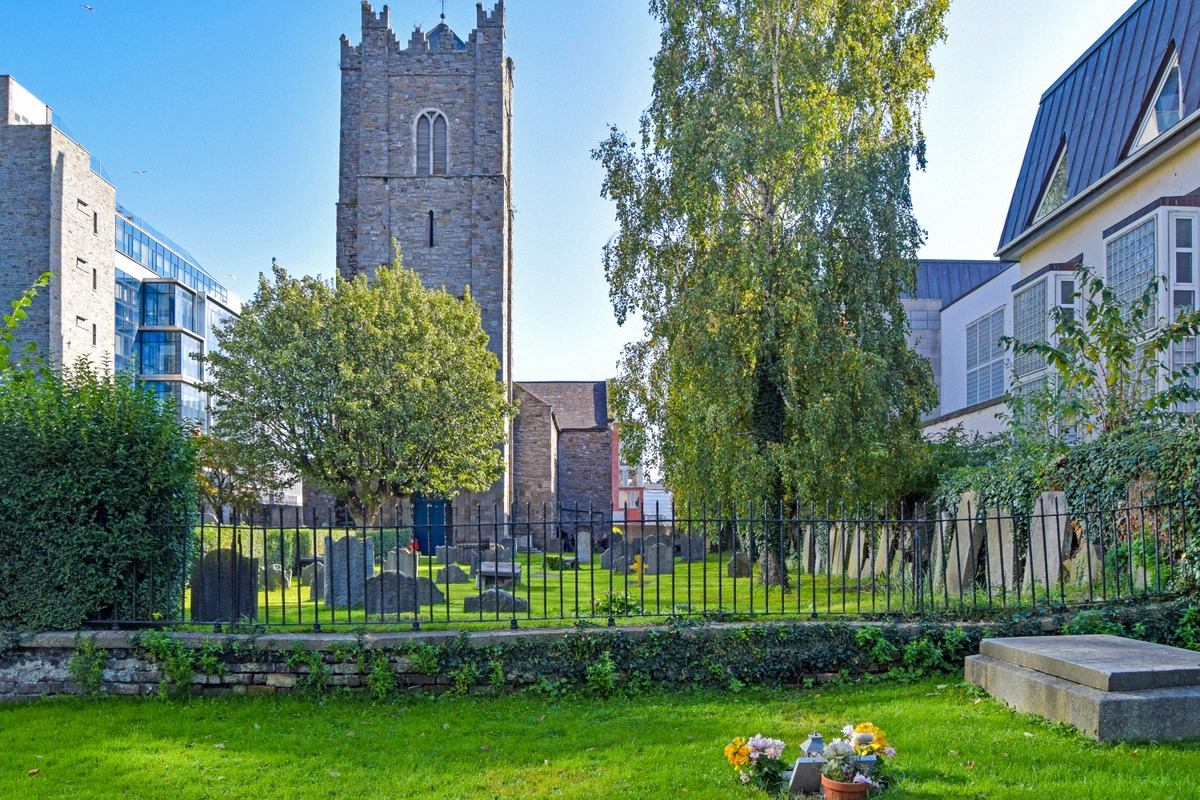
St Michan's Church
Famous crypt with naturally mummified remains, possibly an inspiration for Bram Stoker's Dracula. Crypt tours Mon-Thu only; church admission is free.
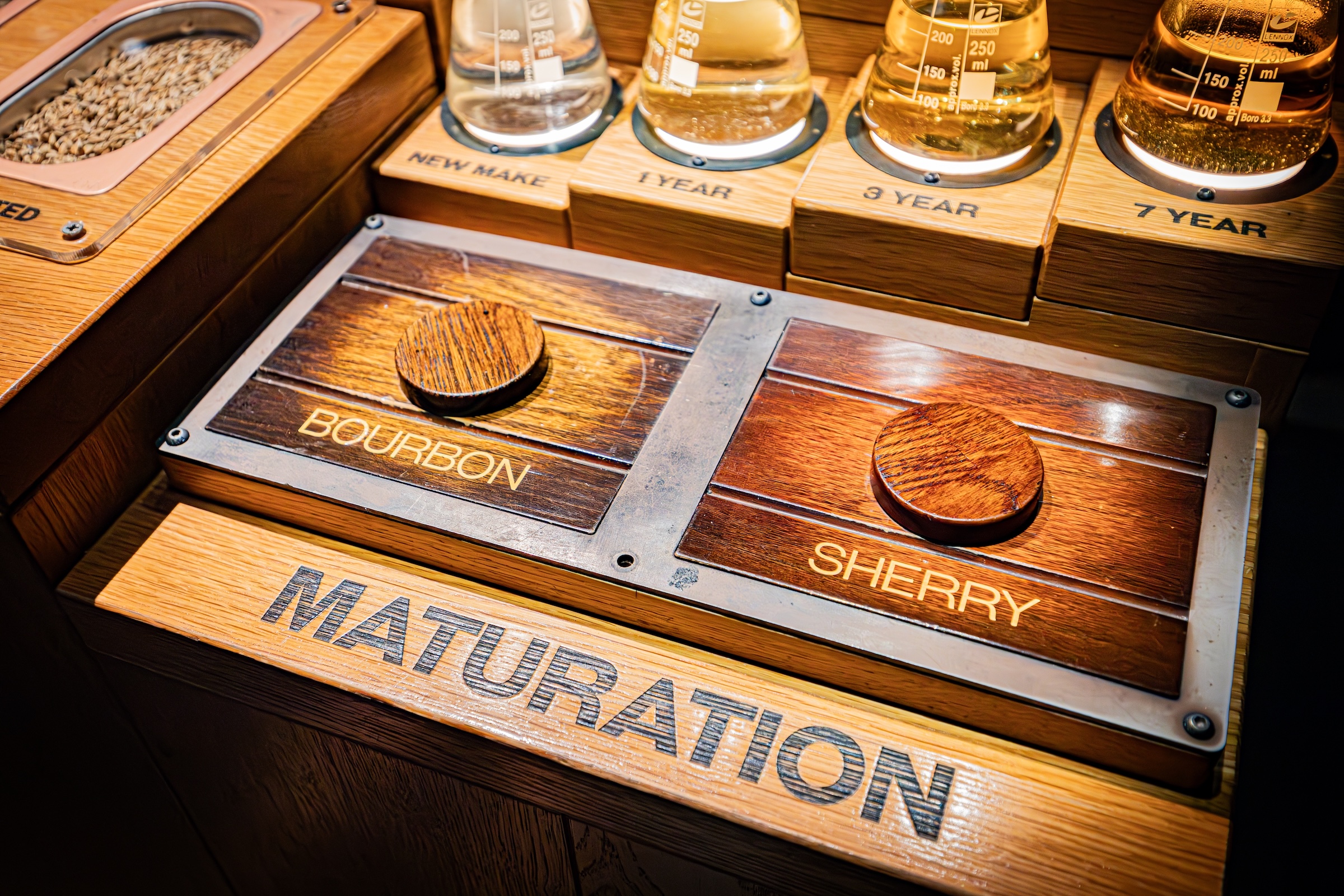
Jameson Distillery Bow St.
Ireland's most famous whiskey brand at its 1780 birthplace. The Bow St. Experience is a 40-minute walk through production and history, with a comparative tasting.
Smithfield Horse Fair
Twice a year, Smithfield Square turns into a traditional horse fair. Free to attend, unusual, and controversial ever since.
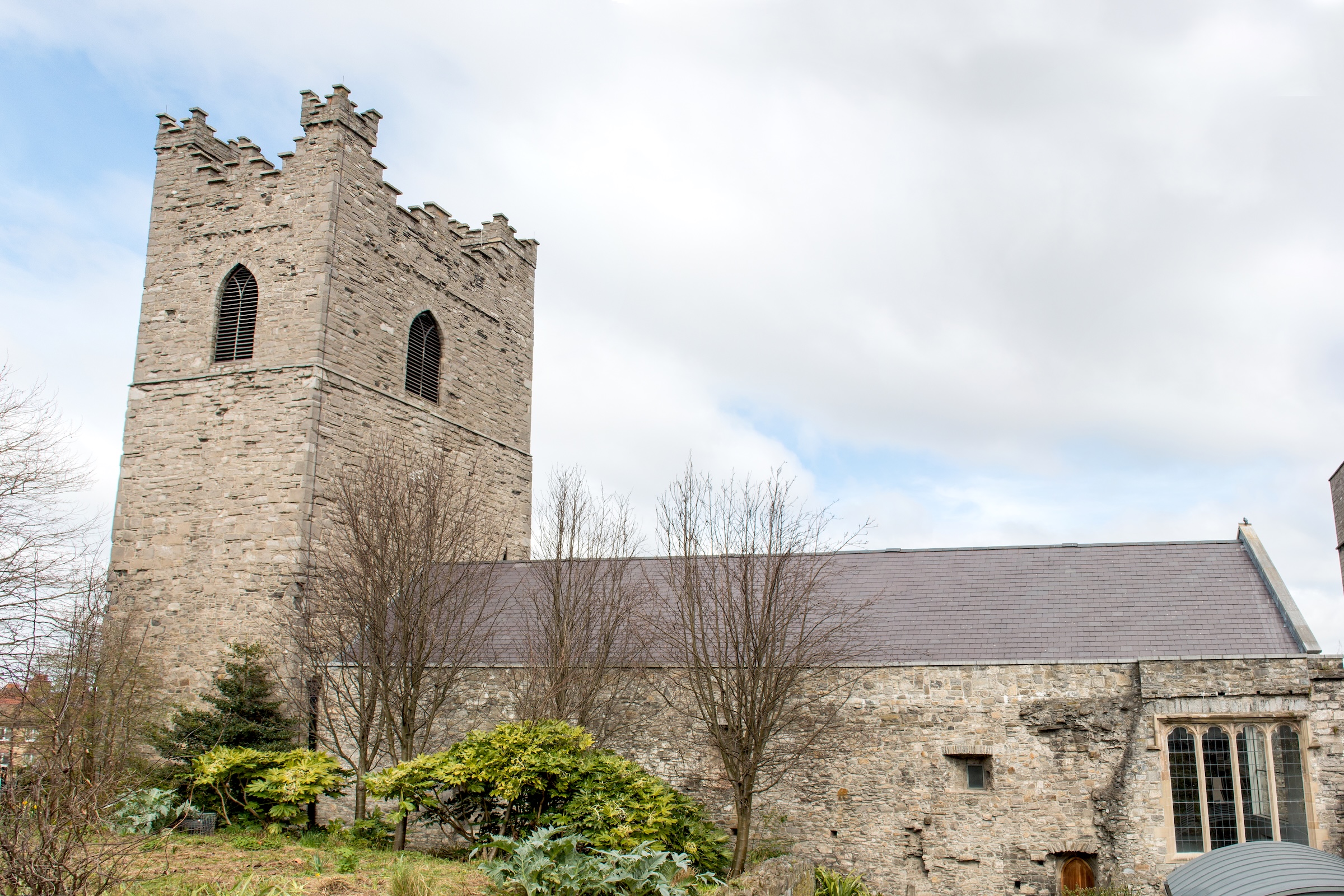
St Audoen's Church
Dublin's oldest church still in parish use, with Ireland's oldest bells and the city's last surviving medieval gate. Free admission, interior open seasonally only.
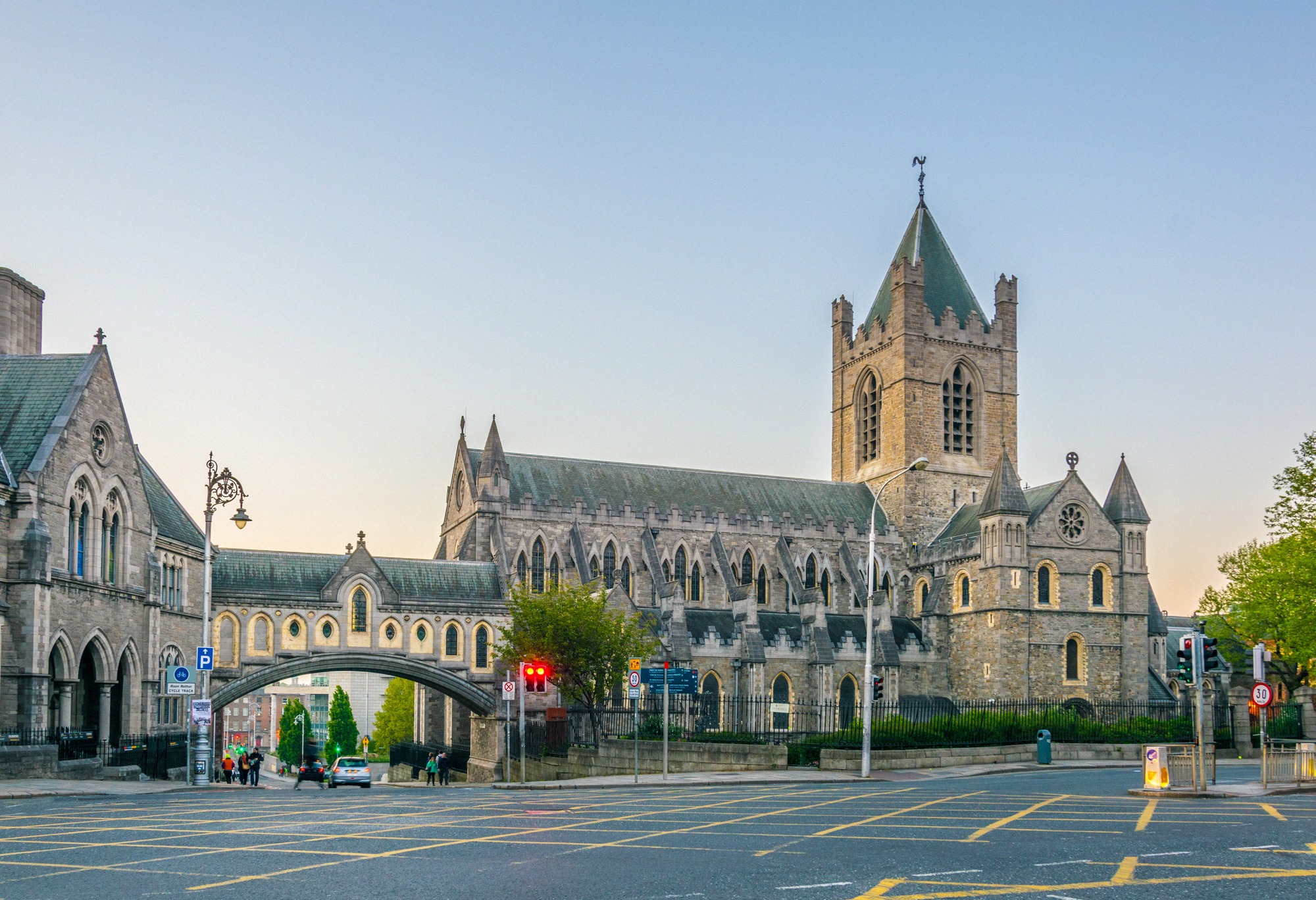
Christ Church Cathedral
Christ Church Cathedral (Cathedral Church of the Holy Trinity) is Dublin's oldest building, home to Ireland's largest crypt, Strongbow's tomb and the mummified cats Tom and Jerry.
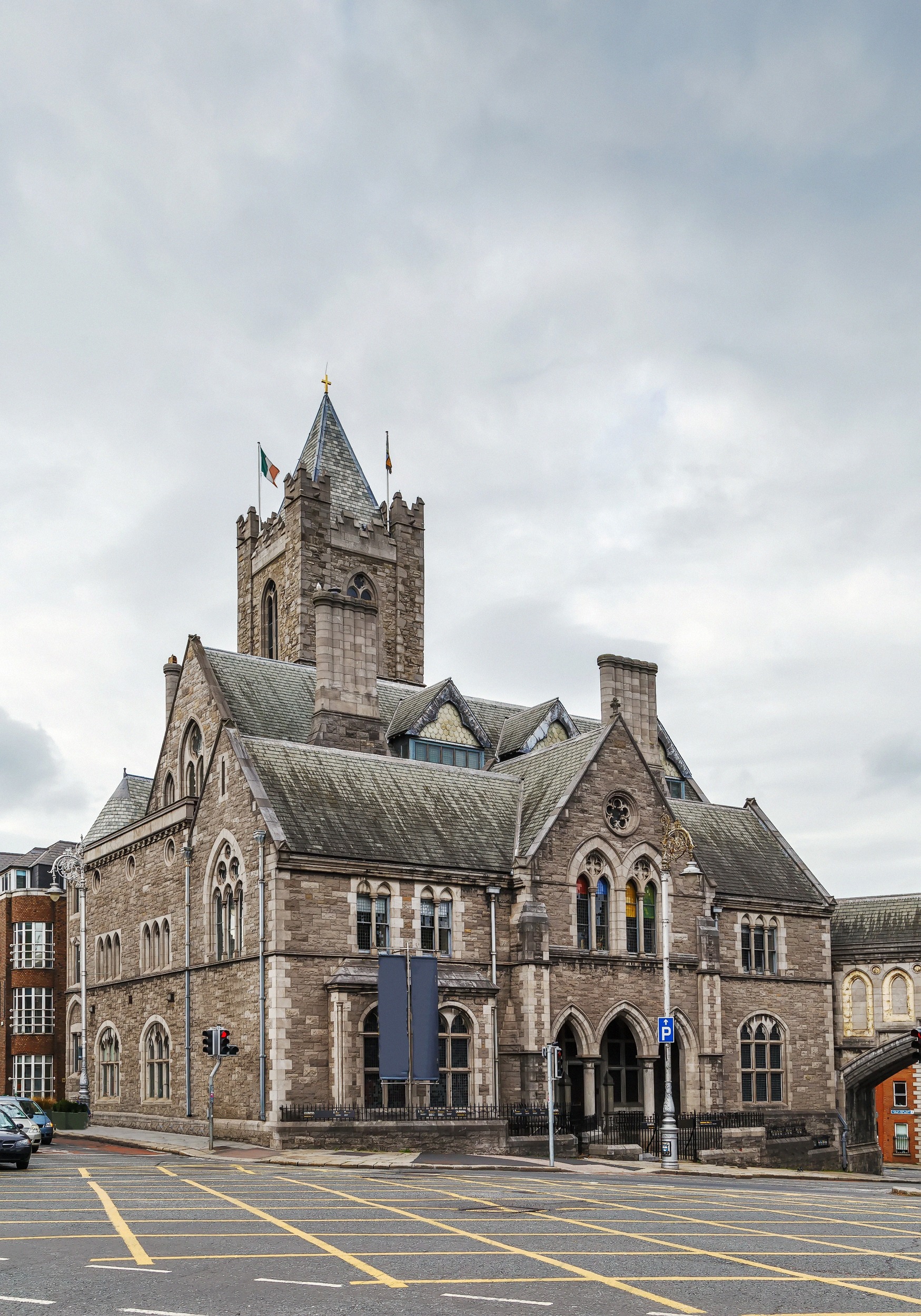
Dublinia
Hands-on Viking and medieval history next to Christ Church Cathedral. Living-history tours, interactive stations and a climb up St Michael's Tower.